
Services
Technical support and service desk
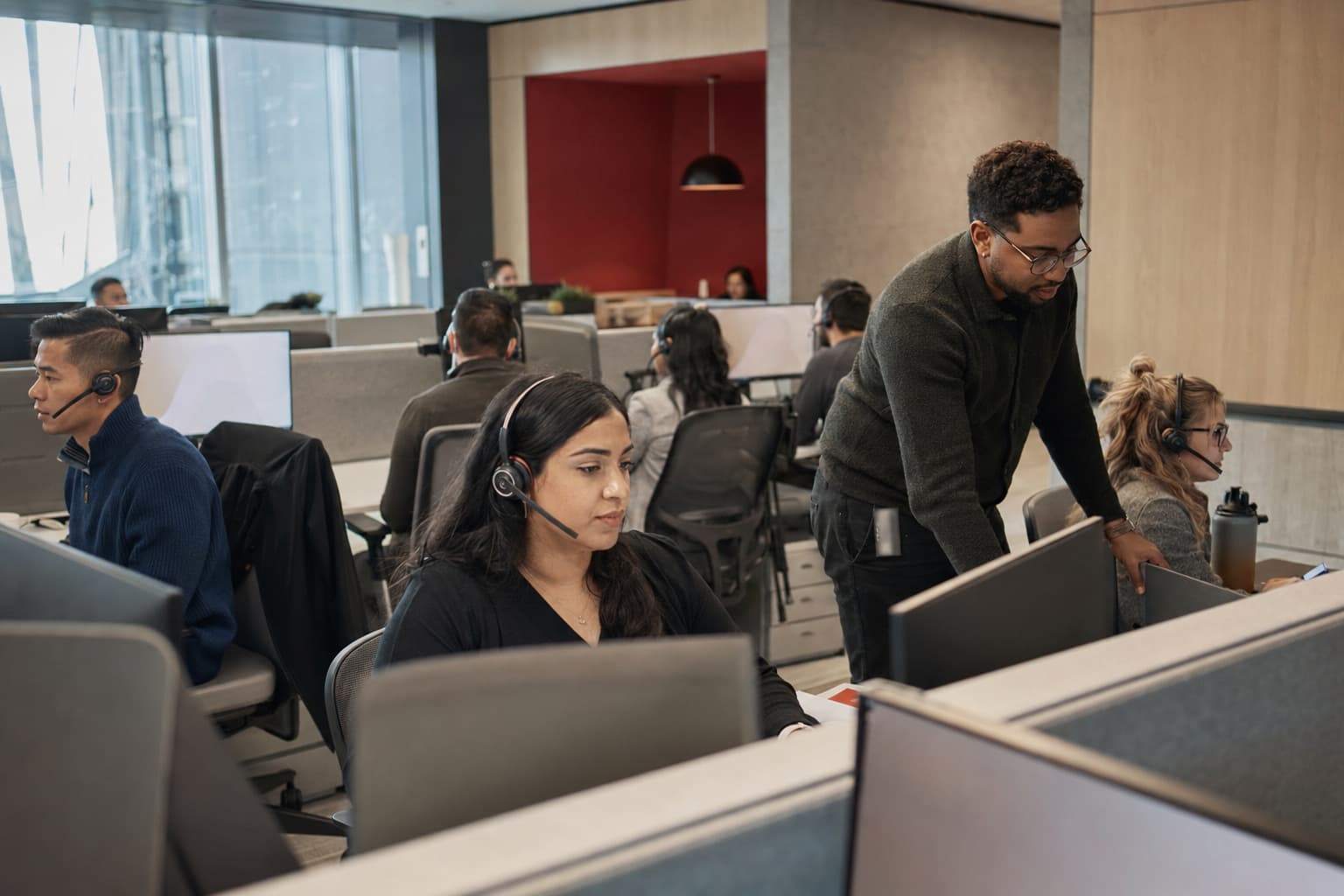
Technical support is where a product proves whether it works, and a bad support experience costs more than the ticket it fails to resolve. In Canada it also has to be delivered in two languages to the same standard, because a Quebec user routed to weak French support reads it as a product that was not built for them. Corpshore Canada provides tier one and tier two technical support and IT service desk operations, bilingually, from Ontario, Quebec and Alberta, measured on first contact resolution and time to resolve. Support is delivered inside your ticketing and telephony tools rather than ours, so the knowledge, the audit trail and the reporting stay in one place. Volume support that does not need to be Canadian can flex into the global network under the same quality framework and the same bilingual standard.
How the service works
- 1
Environment and ticket-driver mapping
We map your product or environment, the common failure modes and the tickets that drive the most volume and the longest handle time. We identify the tickets a better knowledge article or a fix upstream would remove, so the design reduces contact at the cause rather than only resourcing tier one to absorb it.
- 2
Knowledge base and escalation design
We build or strengthen the knowledge base and define clear tier one, tier two and escalation boundaries during transition, in both languages. Agents answer from parity content in English and Canadian French rather than translating an English article live, and escalation paths are explicit so a hard ticket moves rather than bouncing.
- 3
Ramp and technical calibration
Teams of one to ten are typically live within 5 to 15 business days of signature, and deployments of 20 to 100 within 3 to 6 weeks. Agents are calibrated on your product and quality framework in the correct language before they carry live tickets, and the French queue is calibrated in French so a Quebec user reaches technical help of equal quality.
- 4
Steady state and resolution improvement
In steady state the team works to raise first contact resolution and cut time to resolve, feeding recurring tickets back as product or documentation fixes. Performance is reported by tier and by language on cadence, and known-issue and knowledge updates are managed so the same problem is not re-diagnosed by every agent who meets it.
How we deliver it from Canada
Delivery is from Ontario, Quebec and Alberta, in English and Canadian French as standard, with more than thirty-five further languages available and volume support blended from the global network for follow-the-sun where it suits. Coverage runs business hours, extended hours or continuous, and agents work in your ticketing, telephony and remote support tools rather than ours, so resolution history and reporting stay in one governed place.
Pilot, 5 to 15 seats
A dedicated bilingual support team under a Corpshore team leader, with embedded quality and a knowledge base built during transition, sized to prove first contact resolution on a defined product scope.
Established, 20 to 60 seats
Tier one and tier two teams under team leaders reporting to an operations manager, with workforce management, a named quality function and per-language service levels.
Programme, 60 seats and above
A managed service desk with an account director, tiered structure, follow-the-sun coverage and a blended Canadian and offshore design under one quality and bilingual framework where volume justifies it.
Compliance and data handling
Operations comply with PIPEDA by default, with Quebec Law 25 applied to Quebec engagements. Remote access, user data and ticket records are handled to the security and retention standard the environment requires, with access scoped to what the support role needs. Where support touches regulated systems or data, the relevant group security framework applies, and where any volume support is provided from the global network the cross-border transfer position is documented transparently in line with PIPEDA.
Technology
We work in your ticketing, telephony, remote support and knowledge tooling rather than imposing ours, so resolution history and audit trails stay intact. Where you need capability you do not have, we bring proven service desk, knowledge management and quality tooling and integrate it under your governance. Automation and self-service are applied to deflect the tickets that do not need a human, with escalation to a person kept clean where judgment is required.
How performance is measured
- First contact resolution by tier and by language
- Average speed of answer and time to resolve
- Service level attainment against agreed targets
- Reopen rate and escalation accuracy between tiers
- Customer satisfaction on resolved tickets, reported by language
- Ticket deflection through knowledge and self-service
Reporting runs on an agreed cadence, typically weekly operational reviews and monthly business reviews, with first contact resolution, resolution time and satisfaction analysed by us and split by tier and language. Recurring tickets are reported as candidate product or documentation fixes, so the operation reduces contact over time rather than only reporting how much it handled.
Where this applies
Technology and SaaS
Bilingual tier one and tier two product support across chat, email and voice, with recurring tickets fed back to product and documentation rather than absorbed silently by tier one.
Banking and financial services
Secure application and access support and an internal IT service desk, with remote access scoped tightly and regulated-system support kept in Canada under a documented position.
Government and public sector
Bilingual IT service desk and end-user support with Canadian data residency held where required and Quebec French support delivered to the same standard as English.
Pricing and engagement models
Technical support is priced as a dedicated team, a managed service with volume bands and per-language service levels, or per ticket where the work is standardised. Dedicated teams suit complex or brand-sensitive support; managed service suits variable volume; per-ticket pricing suits high volume tier one, and volume support can be blended from the network under one quality and bilingual framework.
Frequently asked questions
Is your technical support genuinely bilingual?
Yes. Agents handle technical tickets in Canadian French and English to the same standard, calibrated in French by French-first quality staff, and the two languages are reported separately. A Quebec user reaches technical help of equal quality rather than a French queue that is slower or thinner, because on a support line a weak French experience reads as a product not built for that market.
How do you raise first contact resolution?
We build the knowledge base and clear tier boundaries during transition, so agents answer from parity content and hard tickets escalate cleanly rather than bouncing. Recurring tickets are fed back as product or documentation fixes, and first contact resolution is reported by tier and language, so the number rises through better knowledge and fewer root causes rather than through pressure on agents to close.
Do you work in our tools or make us use yours?
We work in your ticketing, telephony, remote support and knowledge tooling, so resolution history, the audit trail and reporting stay in one place you already trust. Where you lack a capability, we bring proven service desk tooling and integrate it under your governance rather than moving your support operation into a separate system that then has to be reconciled.
Can you provide continuous coverage?
Yes. Coverage runs business hours, extended hours or continuous, using the global network for follow-the-sun where the work suits it, under one quality and bilingual framework. Regulated-system and sensitive support stays in Canada, while volume tier one can be blended, so continuous coverage does not come at the cost of the standard or the data position.
How quickly can a service desk be live?
Teams of one to ten are typically live within 5 to 15 business days of signature, and deployments of 20 to 100 within 3 to 6 weeks. The timeline depends on product complexity, tooling access and the knowledge base state, and agents are calibrated on your product in the correct language before carrying live tickets rather than learning on real users.
What does the cost saving look like?
Cost reductions of 40 to 75 percent against equivalent in-house Canadian hiring are typical, and the honest figure depends on the tier mix, the language requirement and the coverage model. The cost calculator on this site makes the employer burden explicit, since CPP, EI, Employer Health Tax and workspace cost are what most buyers underestimate when they price a support hire.
Build your Canadian team
Tell us the work, the languages and the coverage you need. You will have a considered response within six hours, or book a discovery call now.
Looking for a role rather than a partner? Explore careers at Corpshore Canada